


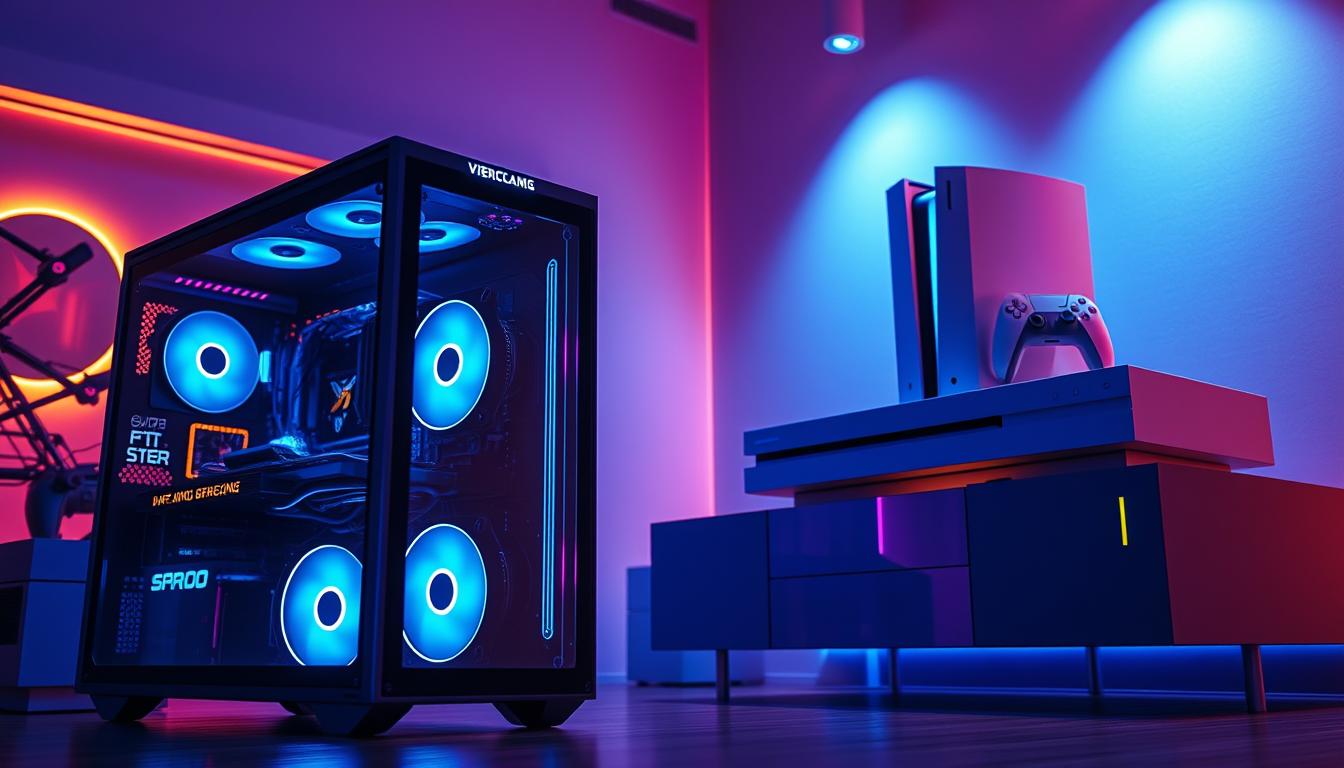

The debate between PC gaming and console gaming has been ongoing for years, with each side having its own set of advantages and disadvantages. Gamers often find themselves torn between the flexibility of PC gaming and the convenience of console gaming.
PC vs Console Gaming
While PC gamers enjoy the ability to customize their hardware and play a wide range of games, console gamers appreciate the plug-and-play experience and exclusive titles. Understanding the pros and cons of each platform is crucial for gamers to make informed decisions.
Key Takeaways
- Gamers must weigh the flexibility of PC gaming against the convenience of console gaming.
- Hardware customization is a significant advantage for PC gamers.
- Console gamers enjoy exclusive titles and a hassle-free gaming experience.
- Understanding the pros and cons is essential for making informed gaming choices.
- Both platforms have their unique strengths and weaknesses.
The Gaming Landscape Today
As the gaming landscape continues to evolve, gamers are faced with a multitude of choices that impact their gaming experience. The industry’s growth has led to a diverse range of platforms, each catering to different needs and preferences.
Current State of Gaming Platforms
The current gaming landscape is dominated by PC and console gaming. PC gaming offers flexibility and customization, with gamers able to upgrade their hardware to keep up with the latest technology. Consoles, on the other hand, provide a plug-and-play experience, with companies like Sony and Microsoft leading the market.

gaming landscape
The Growing Gaming Industry
The gaming industry has seen significant growth, driven by advancements in technology and an increase in gaming communities. This growth has led to more opportunities for gamers, with a wider range of games and platforms available.
Why Platform Choice Matters
The choice of gaming platform is crucial, as it affects the gaming experience. Factors such as performance, exclusivity, and community play a significant role in this decision. Gamers must consider what matters most to them when choosing a platform.
Understanding these aspects helps gamers make informed decisions about their gaming platform, enhancing their overall gaming experience.
PC vs Console Gaming: A Fundamental Comparison
PC and console gaming represent two distinct approaches to gaming, each with its own architecture and user base. This fundamental comparison will explore the core differences between these platforms.
Core Architectural Differences
The architecture of PC and console gaming differs significantly. PCs are highly customizable, with components like graphics cards, processors, and RAM that can be upgraded or replaced. Consoles, on the other hand, have fixed hardware configurations that are designed to work within specific performance parameters.
Key Architectural Differences:
| Feature | PC Gaming | Console Gaming |
| Hardware Customization | Highly customizable | Fixed configuration |
| Upgradeability | Components can be upgraded | Limited to hardware revisions |
| Performance | Can be high-end, depends on hardware | Fixed performance, optimized for specific hardware |
Target Audiences and Use Cases
PC gaming tends to attract a more diverse audience, including those interested in modding, high-performance hardware, and a wide range of game genres. Console gaming, while also diverse, often appeals to those seeking a more straightforward, plug-and-play experience.
Gaming Philosophy Behind Each Platform
The philosophy behind PC gaming emphasizes flexibility, customization, and the pursuit of high-performance gaming. Console gaming, in contrast, focuses on accessibility, ease of use, and a streamlined gaming experience.
In conclusion, the choice between PC and console gaming depends on individual preferences regarding hardware, cost, and gaming experience. Understanding these fundamental differences is key to making an informed decision.
Hardware Performance and Capabilities
Gaming hardware is at the heart of the PC vs console debate, with each platform boasting unique strengths and capabilities. The performance of gaming hardware directly impacts the gaming experience, influencing factors such as graphics quality, speed, and overall responsiveness.
PC Component Options and Upgradability
One of the significant advantages of PC gaming is the ability to customize and upgrade hardware components. This flexibility allows gamers to keep their systems up-to-date with the latest technology, improving performance over time. Key components include the CPU, GPU, and RAM, each playing a crucial role in determining the overall performance of the system.
Console Hardware Specifications
Consoles, on the other hand, have fixed hardware specifications that are determined at the time of manufacture. While this means that console gamers cannot upgrade their hardware, it also ensures a uniform gaming experience across all users of the same console model. Major console manufacturers like Sony and Microsoft regularly update their hardware with new generations, offering improved performance and capabilities.
Graphics and Processing Power Comparison
When comparing the graphics and processing power of PCs and consoles, several factors come into play. PCs can offer superior graphics processing capabilities, especially with high-end GPUs. Consoles, however, have made significant strides in recent years, with the latest models capable of producing high-quality graphics.
Frame Rates and Resolution Capabilities
Frame rates and resolution are critical aspects of the gaming experience. PCs can achieve high frame rates and resolutions, particularly with the right hardware configuration. Consoles also offer competitive frame rates and resolutions, though they may not match the highest-end PCs.
Ray Tracing and Advanced Visual Features
Advanced visual features like ray tracing are becoming increasingly popular in modern games. PCs with compatible GPUs can take full advantage of these features, while newer console models are also beginning to support such technologies, narrowing the gap between PC and console graphics capabilities.
| Feature | PC Gaming | Console Gaming |
| Upgradability | Highly customizable and upgradable | Fixed hardware specifications |
| Graphics Processing | Can offer superior graphics with high-end GPUs | Competitive graphics capabilities, improving with new generations |
| Frame Rates and Resolution | Can achieve high frame rates and resolutions with right hardware | Offers competitive frame rates and resolutions |
| Advanced Visual Features | Supports advanced features like ray tracing with compatible GPUs | Newer models are beginning to support advanced visual features |
Cost Breakdown: Initial Investment vs. Long-term Value
The initial investment and long-term value of gaming platforms are key considerations for gamers deciding between PC and console.
PC Building Budget Considerations
Building a gaming PC can be a significant upfront investment. The cost can range from a few hundred dollars for a basic setup to several thousand dollars for a high-end gaming rig. The flexibility to choose components allows gamers to balance their budget with performance needs.
Console Price Points and Bundles
Consoles typically have a fixed price point, with occasional discounts or bundle deals that include games or accessories. For example, the PlayStation 5 and Xbox Series X are priced similarly, around $500-$600, depending on the bundle.
Upgrade Paths and Depreciation
PCs offer the advantage of upgradability, allowing gamers to improve their hardware over time, potentially extending the lifespan of their gaming platform and maintaining its value. Consoles, however, have limited upgrade options and depreciate faster.
Game Pricing Across Platforms
Game prices vary across platforms. PC games on platforms like Steam often go on sale, and some titles are available for free or at a lower cost. Console games tend to be priced similarly across different consoles, though sales can occur.
| Platform | Initial Cost | Upgrade Cost | Game Pricing |
| PC | $500-$2000 | $100-$500 | $10-$60 |
| Console | $300-$600 | $0-$200 | $20-$60 |
Understanding these costs helps gamers make an informed decision based on their budget and gaming needs.
Game Libraries and Exclusive Titles
The world of gaming is vast, with numerous platforms offering a wide array of games, but the choice between PC and console often comes down to their respective game libraries and exclusive titles.
PC Game Storefronts and Availability
PC gamers have access to multiple storefronts such as Steam, Epic Games Store, and GOG, offering a vast library of games. These platforms frequently have sales and bundles, making PC gaming a cost-effective option for many.
Key Benefits:
- Access to a wide range of games across various storefronts.
- Frequent sales and discounts.
- Ability to play both new and classic games through backward compatibility.
Console Exclusive Franchises
Consoles, on the other hand, boast exclusive franchises that can’t be played on other platforms. For example, PlayStation has the God of War and The Last of Us series, while Xbox has Halo and Gears of War. These exclusives are a major draw for gamers invested in specific ecosystems.
Backward Compatibility Considerations
Backward compatibility is another critical aspect. PC gamers can often play older games with the right hardware, while consoles like Xbox have made significant strides in offering backward compatibility, allowing players to enjoy games from previous generations.
Indie Game Support
Both PC and console platforms support indie games, but PC’s open nature and lower distribution costs make it a haven for indie developers. Platforms like Steam and itch.io have democratized game distribution, giving indie games a significant presence.
In conclusion, the choice between PC and console gaming is significantly influenced by the game libraries and exclusive titles available on each platform. Understanding these differences is key to making an informed decision.
Online Gaming and Subscription Services
The world of online gaming has evolved significantly, with both PC and console platforms offering unique experiences. As gamers, understanding the nuances of these platforms is crucial for maximizing enjoyment and value.
PC Online Platforms
PC gamers have a variety of online platforms at their disposal, including Steam, Epic Games Store, and Origin. These platforms offer a range of features, from community forums to cloud saves, enhancing the overall gaming experience. Steam, for instance, is renowned for its vast library and regular sales, making it a favorite among PC gamers.
Console Online Subscriptions
Console gamers, on the other hand, rely on proprietary online services like Xbox Game Pass and PlayStation Plus. These services offer access to a vast library of games, online multiplayer, and exclusive discounts. Xbox Game Pass, for example, has gained popularity for its affordable monthly fee and extensive game selection.
Free-to-Play Ecosystem Differences
The free-to-play ecosystem varies significantly between PC and console platforms. PC gamers can access a wide range of free-to-play titles through various storefronts, while console gamers are limited to the free-to-play offerings available on their respective platforms.
Online Community Experiences
The online community experience differs between PC and console gaming. PC gamers often engage with larger, more diverse communities through platforms like Steam, while console gamers tend to stick within their respective ecosystems. Understanding these differences is key to choosing the platform that best suits your gaming needs.
User Experience and Accessibility Features
The way we game is changing, with a focus on accessibility and user experience. As gaming continues to grow in popularity, the importance of a seamless and enjoyable experience becomes more pronounced.
PC Setup and Maintenance Requirements
PC gaming offers a high degree of customization, but this comes with the cost of complexity. Setting up a gaming PC can be daunting for new users, requiring knowledge of hardware components and software configurations. Maintenance is also a consideration, as PCs require regular updates and potential troubleshooting.
Key considerations for PC gamers include:
- Hardware compatibility and upgradability
- Operating system and driver updates
- Cooling and noise management
Console Plug-and-Play Convenience
Consoles, on the other hand, offer a plug-and-play experience that is generally more straightforward. With pre-configured hardware and a streamlined setup process, consoles are often more accessible to new gamers.
The benefits of console gaming include:
- Easy setup and minimal maintenance
- Optimized performance for exclusive titles
- A more controlled environment for gaming
Learning Curves for New Gamers
The learning curve for new gamers can vary significantly between PC and console. PCs often require a greater understanding of gaming peripherals and software, while consoles are generally more intuitive.
| Platform | Setup Complexity | Maintenance Needs |
| PC | High | Regular updates and troubleshooting |
| Console | Low | Minimal, mostly automatic |
Accessibility Options for Diverse Players
Both PC and console platforms have made strides in accessibility, offering features such as customizable controls, subtitles, and visual aids. These features help ensure that gaming is inclusive for players with diverse needs.
Ultimately, the choice between PC and console gaming comes down to individual preferences regarding complexity, customization, and convenience. By understanding the user experience and accessibility features of each platform, gamers can make informed decisions that suit their needs.
Control Options and Physical Experience
The way we interact with games is a crucial aspect of the gaming experience, with PC and console gamers having distinct preferences. Control options can significantly impact how immersed a player feels in a game.
Keyboard and Mouse vs. Controllers
The debate between keyboard and mouse versus controllers is longstanding. PC gamers often prefer the precision of a keyboard and mouse, while console gamers tend to favor controllers for their comfort and familiarity. Keyboard and mouse setups offer customization options that can enhance gameplay in certain genres, such as strategy and FPS games.
Customization of Input Devices
PC gamers can customize their input devices extensively, from remapping keys to using specialized gaming peripherals. This level of customization is not always available on consoles, although some do offer customization options.
VR and Alternative Control Methods
Virtual Reality (VR) gaming introduces new control methods, such as motion controllers, which can enhance immersion. Alternative control methods are also being explored, including gesture-based controls.
Ergonomics and Gaming Comfort
Ergonomics and gaming comfort are crucial for long gaming sessions. Gamers should consider ergonomic accessories and comfortable seating to reduce fatigue and improve their overall gaming experience.
Modding and Content Creation
Gaming enthusiasts are increasingly turning to modding and content creation to enhance their gaming experiences. This aspect of gaming allows players to personalize their games, share their creativity with others, and engage with the gaming community in meaningful ways.
PC Modding Communities and Tools
PC gaming is renowned for its vibrant modding communities. Platforms like Steam and NexusMods host millions of mods across various games, from simple tweaks to complete overhauls. Tools like Bethesda’s Creation Kit and Valve’s Source Engine SDK empower creators to develop and share their mods. The PC modding community is vast and active, with many mods enhancing gameplay, graphics, and overall player experience.
Console Modding Limitations
In contrast, console modding is heavily restricted due to manufacturer policies and digital rights management. While there are some homebrew communities, official support for modding on consoles is limited, and most mods are not sanctioned by console manufacturers. This limitation affects the type of content available on console platforms.
User-Generated Content Opportunities
Both PC and console platforms offer opportunities for user-generated content, though the extent and ease vary. PC platforms like Steam Workshop and Minecraft on PC allow for extensive user-generated content. On consoles, while there are limitations, some games like “LittleBigPlanet” and “Super Mario Maker 2” encourage content creation within the boundaries set by the developers.
Streaming and Content Creation Capabilities
Streaming and content creation have become crucial aspects of gaming culture. Platforms like Twitch and YouTube Live enable gamers to stream their gameplay. PC gamers have an edge in content creation due to easier recording and streaming software availability, such as OBS Studio. Consoles, however, have made significant strides with built-in streaming capabilities, making it easier for console gamers to share their experiences.
| Feature | PC Gaming | Console Gaming |
| Modding Support | Extensive, with large communities | Limited, due to manufacturer restrictions |
| User-Generated Content | Highly supported, with tools like Steam Workshop | Supported, but within developer-set boundaries |
| Streaming Capabilities | Robust, with software like OBS Studio | Improving, with built-in streaming features |
As the gaming landscape continues to evolve, the importance of modding and content creation will only grow, offering gamers more ways to engage with their favorite games.
Conclusion: Making Your Gaming Platform Decision
Choosing between PC and console gaming ultimately comes down to understanding your gaming needs and preferences. Throughout this article, we’ve explored the pros and cons of each platform, from hardware performance and cost to game libraries and online gaming experiences.
When deciding on a gaming platform, consider what matters most to you. If you value customization, upgradability, and a vast game library, PC gaming might be the way to go. On the other hand, if you prefer a plug-and-play experience with exclusive titles and a more social gaming environment, consoles are a great option.
The PC vs Console Gaming debate is complex, with each side offering unique benefits. By weighing the pros & cons explained in this article, you can make an informed gaming platform decision that suits your lifestyle and gaming habits.
Ultimately, the best gaming platform is one that provides you with the most enjoyment and meets your gaming needs. Whether you’re a hardcore gamer or just starting out, understanding the strengths and weaknesses of each platform will help you navigate the world of gaming with confidence.
FAQ
What are the main differences between PC and console gaming?
The primary differences lie in hardware architecture, upgradability, and gaming philosophy. PCs offer customizable and upgradable hardware, while consoles have fixed specifications. PCs cater to a wide range of gamers, from casual to hardcore, while consoles are generally more accessible to new gamers.
Can I play the same games on PC and console?
Some games are available on both PC and console, but many titles are exclusive to one platform. PC gamers can access a vast library through various storefronts like Steam, Epic Games Store, and GOG, while consoles have their exclusive franchises and game libraries.
How does the cost of PC gaming compare to console gaming?
The initial investment in a gaming PC can be higher than buying a console, but PCs can be upgraded over time, potentially extending their lifespan. Consoles, on the other hand, have a fixed cost and may require replacing the entire unit to upgrade. Game prices vary across platforms, but some titles are available at similar prices on both PC and console.
What about online gaming and subscription services?
Both PC and console offer online gaming capabilities, with services like Steam on PC and Xbox Game Pass and PlayStation Plus on consoles. These services provide access to online multiplayer, free games, and exclusive content, but the specifics and pricing differ between platforms.
Can I use a controller with my PC, or do I need a keyboard and mouse?
You can use either a controller or a keyboard and mouse with your PC, depending on your preference and the type of game. Many PC games support controllers, and some even offer customization options for input devices.
Are there any benefits to modding my games on PC?
Modding on PC can extend the life of a game, offer new gameplay mechanics, and enhance graphics. PC modding communities are active and create a wide range of mods, from simple tweaks to comprehensive overhauls.
How do I choose between PC and console for my gaming needs?
Consider your gaming preferences, budget, and the type of experience you’re looking for. If you value customization, upgradability, and a wide range of games, PC might be the better choice. If you prefer a more straightforward, plug-and-play experience with exclusive titles, a console could be the way to go.
What are the key considerations for gamers with disabilities?
Both PC and console have made strides in accessibility, offering features like customizable controls, subtitles, and assistive technologies. PC gamers can often find more customization options for accessibility, but consoles also provide a range of accessibility features.