


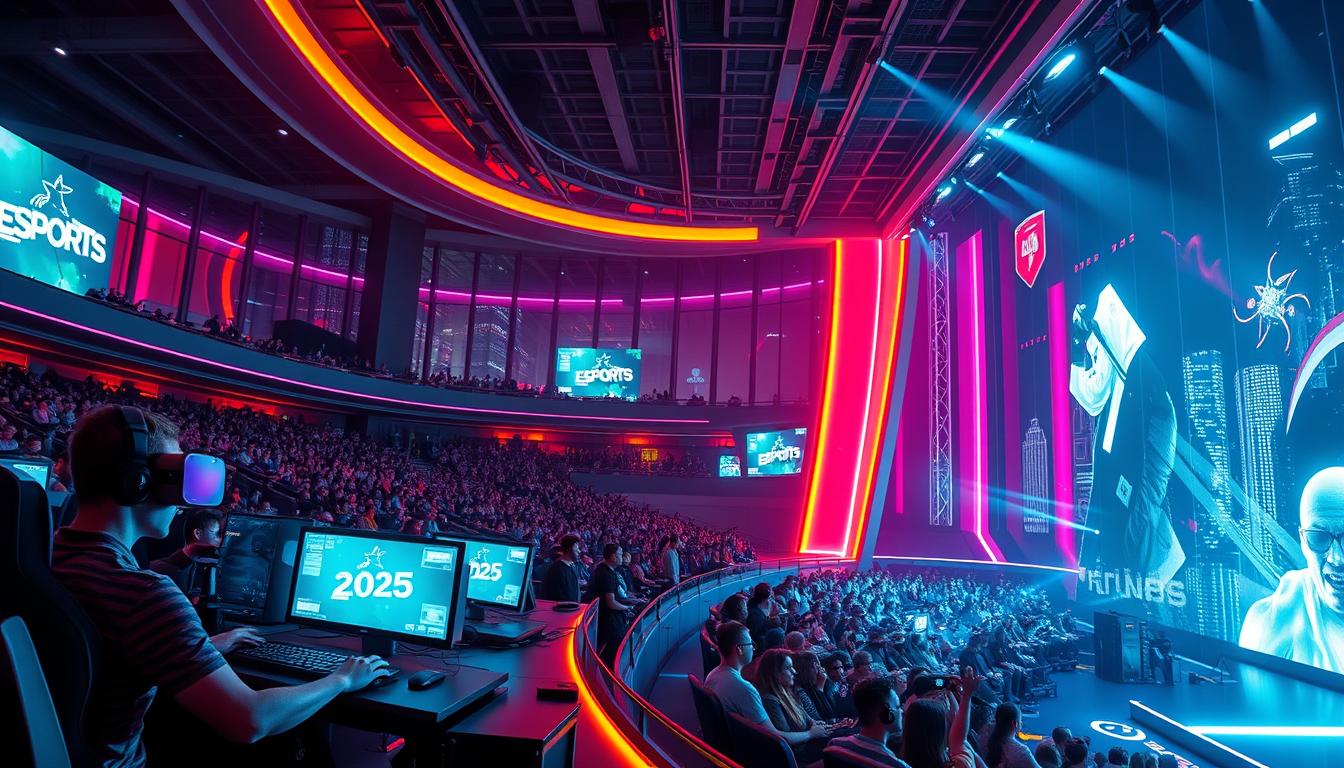

The world of competitive gaming is on the cusp of a revolution. As we look ahead to 2025, it’s clear that esports will continue to evolve at a rapid pace.
Esports in 2025 – What’s New & What’s Next?
With advancements in technology and changes in consumer behavior, the esports landscape is shifting. This article will explore the key trends and innovations that will shape the industry in the coming year.
From new game releases to emerging platforms, we’ll examine what’s on the horizon for esports enthusiasts. Our goal is to provide a comprehensive overview of the current state of esports and what to expect in the future.
Key Takeaways
- The growing importance of virtual and augmented reality in esports.
- New game titles and genres that will gain popularity.
- Emerging markets and regions that will drive esports growth.
- The role of social media and streaming platforms in shaping the esports landscape.
- Key partnerships and collaborations that will impact the industry.
The Current Trajectory of Esports
The trajectory of esports is marked by consistent growth, driven by various factors including technological innovation and changing consumer behaviors. As the industry continues to mature, several key trends and shifts have emerged that are shaping its future.
Key Growth Metrics in 2023-2024
Recent data indicates that the global esports market has seen a significant increase in viewership and revenue. The growth can be attributed to the rising popularity of competitive gaming titles and the expansion of esports leagues and tournaments.
| Metric | 2023 | 2024 |
| Global Viewership | 450 million | 520 million |
| Market Revenue | $1.1 billion | $1.4 billion |
Major Industry Shifts Since 2020
Since 2020, the esports industry has witnessed several significant shifts, including the rise of mobile esports, increased investment from traditional sports teams, and the adoption of new technologies such as 5G connectivity.
“The pandemic has accelerated the growth of esports, forcing the industry to adapt and innovate in response to changing consumer behaviors.”
Pandemic-Era Adaptations That Became Permanent
The COVID-19 pandemic led to several adaptations in the esports industry, including the shift to online events and the development of new formats for competition and spectatorship. Many of these adaptations have become permanent fixtures, enhancing the accessibility and flexibility of esports.

esports trajectory
Technological Advancements Reshaping Competitive Gaming
The esports industry is on the cusp of a technological revolution. As we look to the future, it’s clear that technological advancements are transforming the landscape of competitive gaming.
Next-Generation Gaming Hardware and Performance
The latest gaming hardware is pushing the boundaries of performance, with faster processors, advanced graphics cards, and high-speed memory. These improvements enable smoother gameplay, faster rendering, and more immersive experiences. For instance, the introduction of ray tracing and AI-enhanced graphics capabilities is setting new standards for visual fidelity in games.
5G/6G Connectivity and Its Impact on Competition
The rollout of 5G networks and the research into 6G are revolutionizing connectivity in esports. With lower latency and faster data transfer rates, competitive gaming is becoming more seamless and responsive. This enhanced connectivity is crucial for real-time multiplayer interactions and is expected to further professionalize esports competitions.
AI Integration in Training, Analytics, and Game Design
AI integration is having a profound impact on various aspects of esports, from training and analytics to game design. AI tools are being used to analyze player performance, predict outcomes, and personalize training regimens.
Machine Learning for Player Development
Machine learning algorithms are helping players refine their skills by providing detailed insights into their gameplay and suggesting areas for improvement.
AI-Generated Content and Experiences
AI is also being used to generate content, such as dynamic game environments and personalized experiences, enriching the gaming ecosystem.
As these technological advancements continue to evolve, they will undoubtedly reshape the future of competitive gaming, offering new opportunities for growth, innovation, and engagement.
Virtual Reality and Augmented Reality in Esports
As VR and AR technologies mature, their impact on esports is becoming increasingly significant. The integration of these technologies is not only enhancing the gaming experience but also opening new avenues for competition and spectatorship.
Commercial Viability of VR Esports Leagues
VR esports leagues are gaining traction, offering immersive experiences that traditional gaming cannot match. These leagues are attracting significant investments, with major brands recognizing their potential.
Enhancing Spectator Experiences with AR
AR is revolutionizing the way spectators engage with esports. By overlaying digital information onto the physical environment, AR creates a more interactive and engaging experience for viewers.
Mixed Reality Competition Formats
Mixed reality (MR) combines elements of both VR and AR, offering a unique competitive format. MR allows for more accessible and diverse competition formats, bridging the gap between virtual and physical worlds.
| Technology | Impact on Esports | Accessibility |
| Virtual Reality | Immersive gaming experiences | High-end hardware required |
| Augmented Reality | Enhanced spectator engagement | Accessible via mobile devices |
| Mixed Reality | Diverse competition formats | Requires MR-compatible hardware |
The future of esports is intricately linked with the development of VR, AR, and MR technologies. As these technologies continue to evolve, we can expect to see even more innovative applications in the esports industry.
Esports in 2025 – What’s New & What’s Next?
The esports industry is on the cusp of a new era, driven by emerging trends and technologies. As we look ahead to 2025, several key developments are poised to reshape the competitive gaming landscape.
Emerging Game Titles and Genres Gaining Competitive Traction
New game titles and genres are continually emerging, offering fresh competitive opportunities. Battle royale and multiplayer online battle arena (MOBA) games remain popular, while fighting games and card games are also gaining traction.
| Game Genre | Popular Titles | Competitive Scene |
| Battle Royale | Fortnite, PUBG | Major tournaments with large prize pools |
| MOBA | League of Legends, Dota 2 | Established leagues with significant followings |
| Fighting Games | Street Fighter, Tekken | Growing competitive scene with major events |
Evolving Tournament Structures and Championship Formats
Tournament structures are evolving to accommodate more teams and players. The introduction of franchise models and promotion/relegation systems is creating more competitive balance and opportunities for teams to succeed.
Cross-Platform Competition Standards and Unified Ecosystems
The development of cross-platform competition standards is crucial for the future of esports. Mobile-PC-Console integration is becoming increasingly important, allowing players to compete against each other regardless of their platform of choice.
Mobile-PC-Console Integration
This integration enables a more unified competitive environment, where players can compete against each other seamlessly.
Universal Competitive Rulesets
The establishment of universal competitive rulesets ensures fairness and consistency across different tournaments and games.
As esports continues to evolve in 2025, these developments will play a crucial role in shaping the industry’s future. With new game titles, evolving tournament structures, and cross-platform competition, the esports landscape is set to become more diverse and competitive.
The Business of Esports: New Revenue Models
The esports industry is witnessing a significant transformation in its revenue models, driven by innovative sponsorship deals and digital merchandising. As the industry continues to mature, it’s exploring new avenues to enhance its financial sustainability and growth.
Sponsorship Evolution Beyond Traditional Advertising
The traditional sponsorship model in esports is evolving. Brands are now seeking more integrated and engaging ways to connect with the esports audience. This includes experiential marketing, where brands create immersive experiences for fans, and influencer partnerships that leverage the popularity of esports personalities.
Digital Merchandising, Virtual Goods, and Blockchain Integration
Digital merchandising has become a significant revenue stream. Virtual goods, such as in-game items and digital collectibles, are being sold to fans. The integration of blockchain technology ensures the scarcity and ownership of these digital assets, enhancing their value.
Subscription-Based Team Support and Fan Engagement Platforms
Subscription-based models are gaining traction as a means for fans to support their favorite teams. Platforms like Patreon and team-specific subscription services allow fans to contribute financially in exchange for exclusive content, rewards, and experiences.
Venture Capital and Public Market Investment Trends
The esports industry is attracting significant investment from venture capital firms and public markets. This influx of capital is driving growth, innovation, and consolidation within the industry. Investors are drawn to the potential for high returns and the industry’s rapid expansion.
| Revenue Stream | Description | Growth Potential |
| Sponsorships | Brands partner with teams and events | High |
| Digital Merchandising | Sale of virtual goods and collectibles | High |
| Subscription-Based Models | Fans support teams with monthly subscriptions | Medium |
| Venture Capital | Investment in esports companies and teams | High |
Media Rights and Broadcasting Innovations
Media rights and broadcasting innovations are revolutionizing the esports industry, offering new ways to engage with audiences worldwide. The competition among streaming platforms has intensified, with major players vying for exclusive content deals to attract and retain viewers.
Streaming Platform Wars and Exclusive Content Deals
The battle for dominance in esports streaming has led to significant investments in exclusive content, driving up the value of media rights. Platforms like Twitch, YouTube, and Facebook are securing deals with top esports organizations and leagues, making content availability a key differentiator.
Interactive Viewing Experiences and Viewer Participation
Broadcasting innovations are not limited to content acquisition; they also include enhancing viewer engagement through interactive features. Live streams now often incorporate real-time polls, chat interactions, and predictive analytics, making the viewing experience more immersive.
Traditional Media Integration and Mainstream Adoption
The integration of esports into traditional media is another significant trend. Major broadcasters are now airing esports events, bringing competitive gaming to a broader audience and further legitimizing it as a mainstream form of entertainment.
Data-Driven Personalized Viewing Experiences
Data analytics play a crucial role in personalizing the viewing experience. By analyzing viewer behavior and preferences, streaming platforms can offer tailored content recommendations, enhancing user engagement and satisfaction.
Mobile Esports Dominance and Ecosystem
As we dive into the world of esports in 2025, mobile gaming stands out as a dominant force. The mobile esports ecosystem is thriving, driven by advancements in technology and the increasing popularity of mobile-first competitive titles.
Mobile-First Competitive Titles and Their Global Impact
Games like PUBG Mobile and Clash of Clans have become global phenomena, attracting millions of players and spectators alike. These titles have not only expanded the esports audience but have also created new revenue streams through in-app purchases and advertising.
Regional Mobile Esports Variations and Cultural Influences
Regional preferences play a significant role in shaping the mobile esports landscape. For instance, titles like Honor of Kings are extremely popular in Asia, while other regions may favor different games.
| Region | Popular Mobile Esports Titles |
| Asia | Honor of Kings, PUBG Mobile |
| North America | Clash of Clans, Mobile Legends |
Technological Advances in Mobile Gaming Hardware
The development of more powerful and efficient mobile hardware has been crucial in supporting the growth of mobile esports.
Accessibility and the Democratization of Competition
Mobile esports has democratized competitive gaming by making it more accessible to a wider audience, regardless of their geographical location or economic status.
Global Market Expansion and Regional Powerhouses
The global esports landscape is transforming, driven by expansion into emerging markets and the rise of regional powerhouses. As the industry continues to grow, understanding these dynamics is crucial for stakeholders looking to capitalize on new opportunities.
Emerging Markets in South Asia, Africa, and Latin America
Regions such as South Asia, Africa, and Latin America are becoming significant players in the global esports scene. India, for instance, has seen a remarkable surge in esports popularity, with major tournaments and leagues emerging across the country. Similarly, countries like Brazil and Mexico in Latin America are fostering a vibrant esports culture, driven by a young, tech-savvy population.
According to a recent report, “The esports market in India is expected to grow by 20% annually over the next five years.” This growth is not limited to participation but also includes viewership and investment, with major brands taking notice of the potential in these emerging markets.
Evolution of East Asian Competitive Dominance
East Asia, particularly countries like South Korea and China, has long been a dominant force in esports. These nations have well-established esports infrastructures, including professional leagues, training facilities, and a strong following.
“The esports industry in South Korea has been a trailblazer, setting standards for professional gaming and competitive events.” – Esports Industry Report
The continued investment in esports infrastructure and talent development in these regions ensures their ongoing competitiveness on the global stage.
North American and European Market Maturation
North America and Europe are mature markets for esports, with established leagues, teams, and a significant following. The maturation of these markets is characterized by increased investment, better infrastructure, and more sophisticated marketing strategies.
The growth in these regions is also driven by the integration of esports into mainstream culture, with major sporting events and media coverage contributing to its popularity.
International Competition and National Esports Programs
The rise of international competitions has been a key factor in the global expansion of esports. Events like the Esports Olympics and regional championships are fostering a sense of national pride and competition.
National esports programs are also being developed to support local talent and promote esports as a viable career path. This support includes training programs, financial backing, and infrastructure development, all aimed at enhancing national competitiveness in global esports.
Player Development, Education, and Career Pathways
As esports continues to evolve, the focus on player development and education is becoming increasingly important. The industry is recognizing the need for structured programs that support players throughout their careers and beyond.
Esports Academies and Professional Talent Pipelines
Esports academies are playing a crucial role in identifying and nurturing young talent. These institutions provide aspiring players with the training, resources, and competitive experience necessary to succeed at the highest levels. By establishing professional talent pipelines, esports academies are helping to create a more sustainable and competitive ecosystem.
Key features of successful esports academies include:
- Experienced coaches and trainers
- State-of-the-art training facilities
- Competitive match schedules
- Personalized player development plans
Player Wellness, Mental Health, and Career Longevity
The fast-paced and competitive nature of esports can take a toll on players’ mental and physical health. As such, there is a growing emphasis on player wellness and mental health support. Initiatives aimed at promoting healthy lifestyles, stress management, and mental well-being are becoming more prevalent.
“The mental health of esports athletes is just as important as their physical health. We need to prioritize their well-being to ensure they can perform at their best.” – Anonymous industry expert
Collegiate Esports Scholarships and Academic Integration
The integration of esports into academic institutions is gaining momentum, with many colleges and universities now offering esports scholarships and programs. This development not only provides players with educational opportunities but also helps to legitimize esports as a recognized sport.
Post-Competition Career Transitions and Industry Roles
As players near the end of their competitive careers, they often require support transitioning into new roles within the industry. Careers in coaching, commentary, and esports management are becoming increasingly accessible, allowing players to remain involved in the sport they love.
The future of esports depends on our ability to support players throughout their careers and beyond.
Regulatory Landscape and Governance
Regulatory challenges are emerging as a critical issue in the esports sector, necessitating a comprehensive governance approach. As the industry continues to grow, the need for standardized regulations and effective governance structures becomes increasingly important.
Global Standardization Efforts and Governing Bodies
The esports industry is witnessing a surge in global standardization efforts, driven by various governing bodies. Organizations such as the International Esports Federation (IESF) are working towards establishing universal rules and regulations. Global standardization is crucial for maintaining integrity and fairness in esports competitions. This involves creating a unified framework that can be adopted across different regions and countries.
Betting Regulations, Integrity, and Anti-Corruption Measures
Betting regulations and anti-corruption measures are critical components of esports governance. Ensuring the integrity of competitions is paramount, and this involves implementing strict regulations to prevent match-fixing and other forms of corruption. Effective monitoring and enforcement mechanisms are essential for maintaining the trust of fans and stakeholders. Regulatory bodies are working closely with esports organizations to develop and implement these measures.
Age Restrictions, Youth Protection, and Parental Controls
Protecting young participants is another key aspect of esports regulation. Age restrictions and parental controls are being implemented to safeguard minors involved in competitive gaming. Ensuring a safe and healthy environment for young gamers is a top priority for the industry. This includes educating parents and guardians about the potential risks and benefits associated with esports.
Intellectual Property Rights and Game Publisher Relationships
The relationship between esports organizations and game publishers is governed by intellectual property rights. Game publishers play a significant role in regulating esports competitions, as they own the rights to the games being played. Clear agreements and understandings between publishers and esports organizations are vital for the smooth operation of tournaments and leagues. This includes licensing agreements and adherence to specific rules and regulations set forth by the publishers.
Conclusion: The Esports Horizon Beyond 2025
The esports industry is poised for continued growth and innovation beyond 2025. As technological advancements, new revenue models, and global market expansion reshape the competitive gaming landscape, the esports horizon is filled with opportunities and challenges.
Key trends such as the adoption of virtual and augmented reality, the rise of mobile esports, and the evolution of media rights and broadcasting will drive the industry forward. The esports ecosystem will continue to mature, with a focus on player development, education, and career pathways, as well as regulatory standardization and governance.
As the industry looks beyond 2025, it is clear that the esports horizon will be shaped by emerging technologies, changing consumer behaviors, and innovative business models. With the global esports market expected to continue its upward trajectory, stakeholders must be prepared to adapt and evolve to remain competitive.
The future of esports is bright, with the potential for new markets, new games, and new opportunities for fans, players, and investors alike. As the industry continues to grow and mature, it will be exciting to see what the esports horizon beyond 2025 holds.
FAQ
What are the key technological advancements driving esports growth in 2025?
The key technological advancements driving esports growth in 2025 include next-generation gaming hardware, 5G/6G connectivity, and AI integration in training, analytics, and game design.
How is Virtual Reality (VR) impacting esports?
Virtual Reality (VR) is creating new esports leagues and enhancing competitive experiences, with VR esports leagues emerging as a significant trend, offering immersive experiences for players and spectators alike.
What role does mobile esports play in the global esports ecosystem?
Mobile esports is dominating the global esports ecosystem, driven by mobile-first competitive titles, regional variations, and technological advances in mobile gaming hardware, making competition more accessible.
What are the emerging revenue models in esports?
Emerging revenue models in esports include evolved sponsorship deals, digital merchandising, blockchain integration, subscription-based team support, and fan engagement platforms, diversifying the industry’s financial landscape.
How is the regulatory landscape shaping esports?
The regulatory landscape is shaping esports through global standardization efforts, betting regulations, age restrictions, and intellectual property rights management, ensuring integrity, protecting youth, and governing the industry.
What is the significance of esports academies and player development programs?
Esports academies and player development programs are crucial for nurturing talent, promoting player wellness, and providing career pathways, supporting the growth of professional esports players and the industry as a whole.
How are esports and traditional media integrating?
Esports and traditional media are integrating through streaming platform wars, exclusive content deals, interactive viewing experiences, and data-driven personalized viewing experiences, expanding esports’ mainstream adoption.
What are the trends shaping the future of esports beyond 2025?
Trends shaping the future of esports beyond 2025 include emerging game titles and genres, evolving tournament structures, cross-platform competition standards, and continued technological innovation, driving the industry’s continued growth and evolution.